

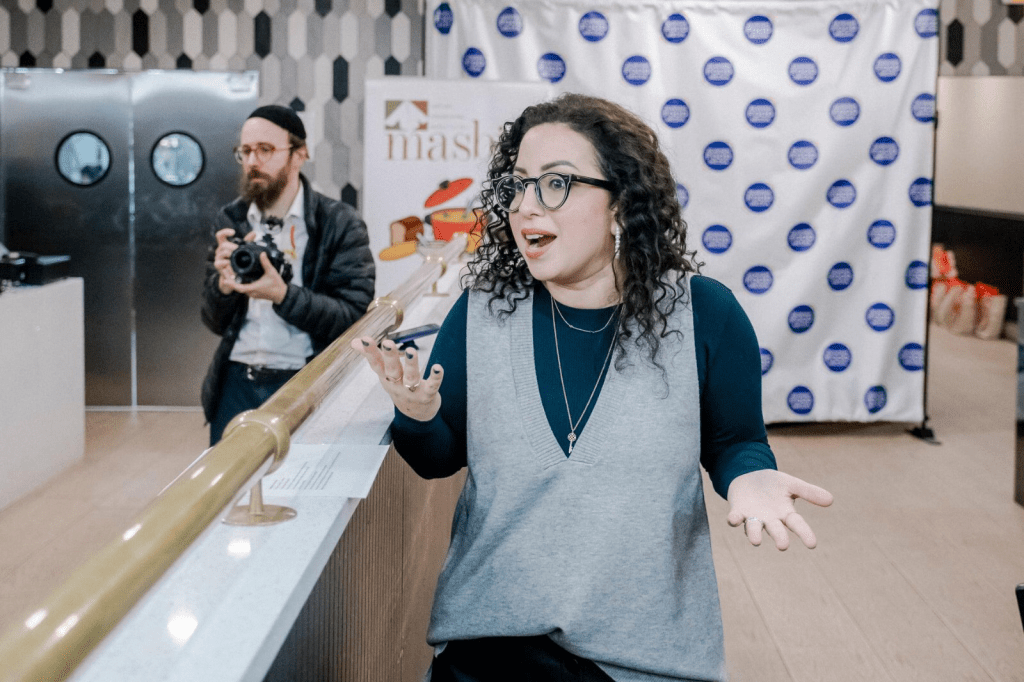
The eighth installment of the Jewish Food Media (JFM) conference took place last week at Rendezvous Kosher Restaurant in Suffern, New York. The group of 85 attendees came together to network with each other, eat some amazing food, and listen to a panel about issues in the industry.
People from all over the world attended this event, held the night before KosherFest for the convenience of the attendees. The event is the brainchild of Melinda Strauss. She’s a full-time health coach who views social media as a second full-time job. But, what exactly is that second job?
“Between Instagram and TikTok, I share videos about my life as an orthodox Jew, develop kosher recipes, style and take my own food photos to share on my website, melindastrauss.com, as well as [my] social media, @therealmelindastrauss,” she says. “I also work with companies to promote their products and I love helping others in our social media community to grow as well.”
If that seems confusing to you, you’re likely not the only one. Some people are unaware that this kind of thing exists in the orthodox world at all. Perhaps even more interesting is the fact that many people that attended this conference actually do this as their only full-time job.
Clearly this isn’t the type of thing that sprung up overnight. A person (especially an orthodox Jew) can’t just decide to make a living on Instagram. It has actually been quite a long road to get to where the industry is now.
“The conference used to be called the Kosher Food Bloggers conference,” Strauss explains. “For the first few years, the conference was mostly Jewish food bloggers who kept kosher. But as the community grew, I realized that I was alienating a lot of people by making it an event specific for kosher-keeping Jews and by calling it a blogger event. The Jewish food scene has chefs, cookbook authors, photographers, brands, bloggers, influencers, and so much more! And now everyone is welcome and we all benefit from connecting with each other.”
The evolution of the JFM conference has led to its growth and success over the years. Basically, the participants have been using a time-honored social media technique to increase the popularity of their network. The idea is that if everyone has followers online, exposure to different things will cause those followers to branch out and follow other content creators. That will drive traffic, clicks and, eventually, dollars to those creating the content.
“When I first started my food blog back in 2011, a few other Jewish bloggers were also popping up on the scene but we didn’t really have a community yet. I realized that the best way we could all grow was by connecting with each other and a conference was a great way to do that. We could network and learn from professionals about things like [search engine optimization] and food photography. I believe we grow better when we grow together!”
The three panelists on this year’s central panel were Miriam (Pascal) Cohen (OvertimeCook.com), Alyssa Goldwater (A Glass of Goldwater), and Dani Klein (YeahThatsKosher). The discussion started on how to engage with brands and earn a living in the industry. But the later part of the discussion is where things got really interesting.
Klein, who works in social media marketing as his day job, talked about some of the ways that these deals work from both sides. His unique perspective on how brands choose brand ambassadors was one that several members of the crowd found extremely informative.
The conversation turned to the Federal Trade Commission (FTC) and their rules for influencers. “I encourage everyone to google ‘FTC influencer guidelines’ and read it,” said Cohen. “They are fairly black and white and easy to understand.”
As the panel made clear, the goal of these guidelines is to make sure that consumers are not misled by thinking that people are endorsing products for free, when they are actually being compensated to do so.
One of the most interesting parts of the night was when Goldwater came out against the term #NotSponsored being used by people supporting a product without being paid.
“That just adds a stigma to everything that is sponsored,” she said. “When I endorse something, it’s because I believe in it, whether they pay me to or not.”
She went on to say that if all the influencers in the room were to be on the same page on this issue, they could erase the stigma of sponsored posts, leading to more revenue and less prejudice against those in the industry.
Klein echoed the views of the other panelists and stressed how important it is to be upfront about the exchange of product or payment in these deals from both sides.
The world of the orthodox influencer is out there, even if many orthodox people are unaware of it.
What will next year’s JFM conference bring? That might be something that nobody can predict. But whatever it is, Strauss and her crew will be ready for it.

 Nati Burnside